Gates of Horn, Ivory

The spiral winds tighter as it descends, so we’re getting pretty close to the core at this point. I’ve done my take on scary books and movies, spent some time babbling about ghost poetry and music . . . but now it’s time to switch off the light and go to sleep.

So, let’s talk about dreams. Not to state the obvious, but they’re remarkable constructs, intricate and maddeningly detailed narratives that we manage to generate out of a sleeping mind.

Even more so, nightmares.

Something deep in our minds wants to scare us. But it’s wrong perhaps to ascribe motive or desire. Perhaps it’s better to say that something deep within our mind needs to scare us.

Fear, apparently, has it’s place… even in our dreams.

From an evolutionary perspective, it’s interesting to speculate on whether that capacity represents a vestigial trait that we are on our way to shedding — or is it the first layer of something new in our evolution, a glimpse of something we might one day become?

I’ve been keeping a semi-regular, semi-faithful journal for a number of years now. Apart from my own internal whining, it has served chiefly as a place to write down my dreams — whether they are little, half-remembered shreds or full length narratives. A lot of the time, I cannibalize the creations of my sleeping mind in my writing.

Sometimes it’s just an episode or an image that gets worked into something. Other times, the dream is the spark that sets something alight in my waking mind. Matters of Mortology started as a dream. And my poem “The Queen of Middle Night” (available in this chapbook, shameless plug) is nothing more than a stack of snapshots from my dreams and nightmares.

Like everyone else, my dreams are deeply persona and they run the gamut: I’ve had murder dreams, flying dreams, erotic dreams, apocalyptic dreams, and even prophetic dreams.

(The answer to your next question is “Yes” — but that’s not our topic for today.)

Once, while I was telling a friend about a dream I’d had, he stopped me and said “Your normal everyday dreams are like my worst nightmares.” I took it as a compliment.

But it’s rare for my dreams to scare me — even at their worst, their darkest.

About fifteen years ago, though, I had one of those sit-bolt-upright-in-bed kind of dreams. In it, I encountered one or two of my biggest fears. Yet it wasn’t a scary dream. It was one where you wake up with a gasp, sobbing uncontrollably.

Scariest dream I know of isn’t one of mine. It’s one I heard my father tell my mother, years ago, and it is a very clear memory. We were driving along in the car — that old blue Buick of ours —- and the windows were down. I was in the backseat and I don’t even know if they knew (or cared) that I was listening.

But, as you can tell, it made an impression on me.

The funny thing is, I asked my father about it a few years ago and he doesn’t remember it — neither the dream nor the telling.

Dreams are personal things, so I won’t go into his telling of it here. But I can share a monologue from one of my plays, one in which I shamelessly cannibalize his dream for my own:

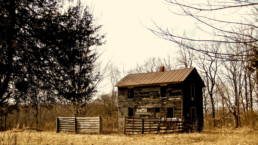
I am in the old house, where we lived back before my parents split up. I’m standing in the doorway of the back bedroom, the one where guests would sleep when they came to stay. But no one has come to stay for a long, long time.

The air in the room is warm and musty and thick. Outside, the sun is going down. Tiny particles of dust roam in the shaft of yellow light that spills in through the grimy window.

Against the wall, half-hidden in the shadows, is an old chest of drawers.

The top drawer is open.

A mirror hangs on the wall above it, grimy and filmed with dust. The top drawer is open.

I wipe the dust away from the smooth surface of the mirror. My reflection, my face, hollow and pale, stares back at me.

The top drawer is open.

I look in and there’s, there’s something in there, I don’t know what. Something I shouldn’t have seen. I slam the drawer shut and turn to leave the room, suddenly afraid.

Halfway to the door, the dull sound of wood rasping behind me freezes me in place. I turn around.

The top drawer is open.

I go back and push it closed again.

I step away and, and, the drawer, it . . . it slowly slides out again.

I push it closed, I lean against it, trying to hold it closed. But I can feel something inside pushing back. It’s stronger than I am, my feet are slipping on the floor, I can’t hold it in any longer.

I step back, halfway turn to run and stop when, one by one, all of the drawers slowly slide open.

Like “The Bogeyman” story I mentioned yesterday, my dad’s dream stayed with me for a very long time. In fact, it’s still quite strong in my mind. Any time I pass a drawer that’s not quite closed, I can’t help but push it shut.

And, each time I do, I step back and wait a moment… half expecting something inside will slowly push it open once again.

The Livid Scar

Leading up to Halloween this year, I’ve been writing a bit about various things that scare me, and why. So far, I’ve gone through movies, poetry, and music. I’ve got a few more things I want to write about but it’s time to take a turn deeper inward and talk about books.

On this subject, books present a problem. Like movies, there’s lots to choose from — and, frankly, a lot of junk food. I’ve read my fair share of stories that deliver the literary equivalent of “rubber mask” shock without lasting resonance (or, to my sensibilities, quality).

I’ve spent most of my life carrying around books. Like an alcoholic hiding booze around the house, so I am with reading. They’re in my car, virtually every room of the house, at the office, in my briefcase — just within reach if I’ve got a free minute or no one’s looking.

Growing up, books were everywhere. Most of my family were (and still are) big time readers, everyone has something on their nightstand at the very least. Which meant that, as a kid, I had access to a lot of books that were way over my head. One of the best things that ever happened to me was the simple fact that my parents didn’t discourage or prevent me from exploring those things. I can remember them suggesting things, recommending that something might not be interesting or suitable, but I can’t recall a time when anyone ever said “You can’t read that.”

At a certain point, my older brother seemed to have a lot of horror books lying around. Teenagers.

I remember picking up a collection of early Stephen King short stories that I found in his room. I was probably ten or eleven years old. The book scared the crap out of me.

And I couldn’t stop reading it.

One of the stories — “The Bogeyman” — stayed with me for a very long time. There’s no surprise about this. King does an excellent job of capturing that innate fear that small children have of the closet door being open just a tiny bit. Since I was still a little kid, his explanation for why the closet always seemed to be ajar (see the title of the story) rang the hotline of my imagination over and over again. As such, it was years before I finally stopped checking closet doors before I went to bed. Sometimes I still do.

Worst (best?) of all, though is the story that leads off the collection. “Jerusalem’s Lot” owes a great deal to H.P. Lovecraft, something I didn’t realize until much, much later. As stories goes, it follows the classic arc of a man returning to the ancestral homestead only to discover dark secrets and influences lurking in his family’s history. I could write for pages about the varied themes that King (and Lovecraft et al) explore in these kinds of stories, but what I really want to tell you about is a moment near the ending of the story.

The protagonist has ventured into a secret basement/crypt and come face to face with some nasty relatives who still bear the marks of their own self-inflicted deaths. And, of course, they’re still alive. I won’t transcribe it here (it really is worth reading, if that’s your sort of thing) but King’s description of the sheer, evil lunacy in their eyes is excellent. Pure King distilling pure Lovecraft.

They stayed with me, those two. As a child, they were lurking behind every heating register (we didn’t have basements in California). I could feel their eyes on me.

And I can still see them, in my imagination, as vivid as when I first read (and then reread) the story as a child.

Twenty years ago, I spent a few months living alone in a twenty-room mansion in Santa Barbara, California. It was over a hundred years old and I made the mistake of reading Lovecraft for the first time while I was living there. I regret it now that I never really explored the whole of the house, from attic to basement.

But I had no doubt that, had I done so, those two ghouls from King’s story would have been there… waiting.

Thin Rain…

Poetry is probably one of the few things that doesn’t typically get marginalized into genres. Sure, you have anthologies geared towards specific themes like Love/Romance or Nature but that seems fairly rare and certainly as artificial the literary classification that I’ve written about here from time to time.

Edgar Allen Poe notwithstanding, Poetry seems to be one of those things that people don’t typically associate with Horror — either as a genre or as an emotional reaction.

I don’t know that I’m smart enough or qualified enough to really delve into the nature of Poetry and how it works on us as readers — not without seriously embarrassing myself. But at the very least, I would like to share a poem that has stayed with me ever since I first read it, long ago when I was young.

There were a number of books on shelves in our family room — put there, I expect, because of the attractiveness of their binding and the need to fill the shelf with something. There was a multivolume set called “The Yale Library”, as I recall, along with a handful of other books that seemed to serve no other purpose than to be held up by decorative bookends on the mantle.

One of the books was a volume of collected poetry by Edna St. Vincent Millay. I think it must have been my father who first pointed me to her poem “Wraith” when I was still in elementary school:

“Thin Rain, whom are you haunting,
That you haunt my door?”
—Surely it is not I she’s wanting;
Someone living here before—
“Nobody’s in the house but me:
You may come in if you like and see.”

Thin as thread, with exquisite fingers,—
Have you seen her, any of you?—
Grey shawl, and leaning on the wind,
And the garden showing through?

Glimmering eyes,—and silent, mostly,
Sort of a whisper, sort of a purr,
Asking something, asking it over,
If you get a sound from her.—

Ever see her, any of you?—
Strangest thing I’ve ever known,—
Every night since I moved in,
And I came to be alone.

“Thin Rain, hush with your knocking!
You may not come in!
This is I that you hear rocking;
Nobody’s with me, nor has been!”

Curious, how she tried the window,—
Odd, the way she tries the door,—
Wonder just what sort of people
Could have had this house before…

It’s a ghost story, obviously. But it doesn’t read to me like a deliberate work of horror, although it’s difficult to know what Millay’s inspiration and intention was. I can remember combing through the rest of the book looking for something else, but (at the time) none of it struck me in the same way.

Because she didn’t write more in this vein, “Wraith” rings true to me, genuine. With apologies for my own speculation, the poem feels like it came directly from experience. Certainly most of the rest of her poetry follows that process, so why wouldn’t this one?

Not only does that make me feel a kinship with Millay but I also see that she felt that same quality, that sadness which seems to lie at the heart of a lot of ghost stories.

And that it is a poem only serves to enhance and expand that feeling of the other, the weird — I mean to say, that late-at-night-no-one-awake-but-me feeling that so often amplifies every sound and strips away the natural, rational skepticism that prevents us from remembering that we live among the dead, one world overlapping the other.

In my case, it doesn’t have to be that late at night, either.

Writing this, I realize for the first time how much this poem parallels my comments from a couple of days ago, the idea of home and comfort and how important those things are to us now and after we’re gone. Perhaps that’s one of the reasons why it has stayed with me for so long. When I finally left my parents’ home and went off on my own, Millay’s collection was one of the things that went with me.

I have it still and, still, it haunts me.

The Music of Fear

spookyMusic is a funny thing and, usually, not something you think of in terms of horror. Even at it’s darkest, I don’t know that it’s ever scary.

There are some kinds of music — particularly the harder, harsher speed metal or even some of the more artsy experimental composers — which set my teeth on edge and kickstart the flight-or-fight impulse in me. But I don’t know that I’d classify that response as fear. The stories about Stravinsky and the premiere of his The Rite of Spring, that’s a pretty incredible tale of the visceral power of music. The best exploration I know of on that subject is this excellent RadioLab episode.

But, from time to time, music has actually frightened me — and not because it was cacophonous or atonal/experimental. There was something genuinely frightening about the circumstances surrounding it and it’s stayed with me ever since. Here’s the top three…

When my brother was in high school, he’d listen to music late at night in his room. He had a battery-powered cassette player and the music would keep pace with the amount of charge left in the batteries. The longer they’d gone, the slower the music would become — producing some genuinely creepy effects. I can remember the batteries going dead one night while he was listening to “Radio Clash” and the music just started grinding down, slower and slower> I was asleep in my room and I could hear, faintly, “Thiis . . . isss . . . the Raaaadiooo . . . Classsshhhh…” drifting across the hallways, just barely audible.

And then he rewound the tape and listened to it again. Joe Strummer’s laugh at the beginning was chilling and I drifted off into half-waking dreams of a demon band, moping their way through the slow-motion tune. Creepy.

And then there was the night, years later, when I was up late writing. I’d recently discovered the music of Glenn Gould and it was just about the only thing I would listen to. As I said, it was late and I was alone in the apartment, working on a particularly difficult segment for a play that I’d been commissioned to write. It was quiet and I had Glenn Gould on, very low and repeating the album over and over again.

A few hours into writing, I realized that I could hear a voice, low and measured, just on the edge of consciousness. I got up and checked around the apartment — nothing. A while later, the voice edged its way back into my consciousness again. Once again, I got up and checked around, looked outside — nothing.

I stood there, listening.

There. The voice rose and fell again, very low.

I switched off the music to hear better. Nothing.

Turning the music back on, the voice began again and I realized that the voice was on the music, on the recording. I did not know it at the time, but Gould had a tendency to sing or hum along with himself as he played. And, because he had passed away years before, I was more or less listening to the voice of a ghost.

But the creepiest music I have ever heard is the times, late at night, when I would be shocked out of a deep sleep by the sound of the cat walking across the open piano. That strange, discordant jumble of notes was so startling, so strange in an otherwise quiet house.

Worst of all was the time when, hearing the piano, I sat up to go down and close the lid on the keys . . . only to find that the cat was sleeping at the foot of the bed. It was a difficult task to work up the nerve to go downstairs anyway and check on the otherwise quiet house. I found nothing, of course — leaving me with no other explanation for what (or who) might have been playing in the night.

I will say, however, that the theme from the Haunted Mansion — aka Grim Grinning Ghosts — is a genuinely spooky little tune. And I love it. But this is coming from a guy who has Tubular Bells as his ringtone. So.

Welcome Home, Eleanor

Last year, I posted a few articles during the week leading up to Halloween. At the time, it had been my intention to write one article a day on different topics. But real life stepped in and I had to stop after Werewolves and Ouija Boards. Alas.

I’m taking another swing this year. For many reasons, Halloween is my favorite holiday and I thought it might be fun to try a “Best Of…” approach this year, enumerating the scariest things I’ve seen, heard, read, and experienced.

Let’s start easy and work our way inward towards the core, where the really scary things are…

A ghost story relies on a recipe, a delicate balance of flavors and textures: Suspense, fear, humor, sympathy, and restraint. That last element is key to a good ghost story, which is why there are so many bad ones.

There are lots of scary movies, chainsaws and rubber mask monsters. Like junk food, they satisfy a craving and can even be enjoyable. But they don’t give you much beyond the momentary pleasure and (perhaps) an unhealthy craving for more. No one fondly remembers that great Big Mac they had back in 1983 — although you might remember your first, in the same way you might remember the first scary movie you saw.

Full disclosure: I don’t like being afraid.

But for many reasons, ghost stories have a fond place in my heart. I don’t particularly care for Horror as a whole. Despite coming of age in the ‘80′s, I never had much interest in the serialized attacks of Freddy, Jason, and Michael Meyers. But I’ve never been overly fond of junk food either. And the current generation of Saws, Hostels, et al interest me not in the slightest. There may be technical skill in their making, they may share many of the ingredients that I appreciate in other recipes, but they are for the most part distasteful to me and I don’t understand their apparent wide appeal. But I feel the same way about KFC’s dinner bowls, so…

(Writing this, I think there’s something to be said for many of the Asian films that have been released in recent years. I’ll take a Ju-on or The Eye over their American counterparts any night of the week. There may be a food equivalent there as well, preferring Chinese take-out to American fast food. But I digress…)

But a ghost story — at least, the ones I think work best — isn’t meant to scare you, not really. Stories, whatever their stripe, are meant to be remembered. A good story, a good ghost story, stays with you. It’s hovering there in the back of your head when you’re driving home, when you’re getting ready for bed. It’s there on the edge of the bed as you’re falling asleep.

A good ghost story, yes, it haunts you.

There’s more to it than that, though. I think that a ghost story works best when, at it’s heart, it isn’t scary but sad. The underlying story of a movie like Shyamalan’s The Sixth Sense — which is actually a number of ghost stories artfully stitched together — is founded not on fear but on a genuine, human quality. At it’s core, that sadness sets up a chain reaction with the scary elements, creating a reciprocating, oscillating wave of sorrow and fear which is, ultimately, extremely fulfilling and enjoyable.

But, as great as I think it is, The Sixth Sense isn’t the movie I want to write about today.

It was Halloween, maybe twelve or thirteen years ago. I’d taken my son out trick or treating earlier in the evening, bringing him home against his protests that his bag “wasn’t all the way full yet.” I’d monitored the door with my candy bowl at the ready until the doorbell stopped ringing. I put the boy to bed and shut off the porch light — that universal symbol of Closing Time — and headed downstairs to see what TCM was showing for their Halloween night programming.

By sheer luck, I turned on the television just as the opening moments of Robert Wise’s The Haunting were beginning. I’d heard of the movie and Shirley Jackson’s book, but I’d not been exposed to either one.

Needless to say, I was in for a treat. For two hours I sat transfixed as the story rolled over me like a storm, all stillness and thunder punctuated with bursts of staccato, lightning-fast shock.

Smarter people have written more — and with more insight than I could hope for — about this movie and the masterful emotional and technical achievement it represents.

Suffice it to say that, somehow, Wise puts you in the house. You’re right there, experiencing the story first-hand in a way that few other movies manage to accomplish. Part of the recipe is the restraint Wise shows throughout, of course. Much of it is Nelson Gidding’s script and how he holds back on information, never letting the audience outpace the characters as they move through the story.

One of the best examples of these qualities is how Wise puts you right next to Eleanor and Theodora when that unseen, insistent pounding comes up the hallway towards the door of their room.

This is a movie that typically make’s everyone’s “Best Of…” list. Everything they say about it is true. Not only is it a great scary movie, it’s a great movie. Invariably, most of the credit for this is ascribed to a twist of fate. The legend is that Wise didn’t have a budget for special effects, which makes his unconventional use of sound and camera angles all the more powerful. The unknown, the unseen is far more terrifying that the rubber mask.

But Wise has excellent material to work with nonetheless. The performances are pitch-perfect across the board. The screenwriting accomplishes something uncommon — something that I don’t say lightly — by improving upon the source material. The movie is (with apologies to Ms. Jackson, whose work I love) better than the book.

But yes, the film is somewhat dated and slips into melodrama during a few scenes. But to my eyes, that actually enhances the effect. It’s quaintness, it’s charm sets you at ease — so much so, that you don’t notice that your own growing dread as the story progresses.

And it’s a story that stays with you, it resonates long after the credit roll. And not just as something recalled in the dark, starting at the sounds of an old house settling around you. The genuine, human quality of the story — Eleanor’s yearning for a home, a place of her own — is as haunting and resonant as any tragedy.

It reminds us that ghosts are just like us, they’re human beings with their own stories, trapped in their own sadness.

And, if we’re not careful, we might end up the same way.

An American Halloween

<span style=”font-style: italic;”>Fear is a wonderful thing, in small doses. You ride the ghost train into the darkness, knowing that eventually the doors will open and you will step out into the daylight once again. It’s always reassuring to know that you’re still here, still safe. That nothing strange has happened, not really. It’s good to be a child again, for a little while, and to fear — not governments, not regulations, not infidelities or accountants or distant wars, but ghosts and such things that don’t exist, and even if they do, can do nothing to hurt us.
</span><div style=”text-align: right;”>— <a href=”http://www.nytimes.com/2006/10/31/opinion/31gaiman.html?ex=1319950800&amp;en=936cc44f65110fa8&amp;ei=5090&amp;partner=rssuserland&amp;emc=rss”>Neil Gaiman<span style=”font-style: italic;”></span>
</a><span style=”font-style: italic;”></span></div>